
Add Visual Appeal Without Sacrificing Durability
Stamped and decorative concrete services for patios, walkways, and driveways in Ontario, California
Stamped concrete lets you create the look of natural stone, tile, or brick without the cost and maintenance of setting individual units. The process involves pouring concrete and then pressing texture mats into the surface while it is still workable, which leaves behind realistic patterns and joint lines. In Ontario, stamped concrete is popular for patios, pool decks, and driveways because it holds up to heat, foot traffic, and vehicle weight while offering more design flexibility than plain gray slabs.
Moes Concrete works with homeowners across Ontario and surrounding areas to choose patterns, textures, and color options that suit their property. After the concrete is poured and leveled, color hardener is broadcast onto the surface, and release agent is applied before stamping begins. This keeps the mats from sticking and adds depth to the finished look. Once the concrete cures, it is sealed to protect the color and make the surface easier to clean.
If you want a patio, walkway, or driveway that stands out without requiring the upkeep of natural stone, get in touch with Moes Concrete to schedule a decorative concrete consultation in Ontario.
What Goes Into a Stamped Concrete Project
Your stamped concrete project in Ontario starts with site preparation, including excavation, grading, and forming the area to the correct dimensions. A compacted base is installed to prevent settling, and reinforcement such as rebar or wire mesh is placed before the pour. The concrete is then placed, screeded flat, and finished with a bull float to create a smooth working surface for stamping.
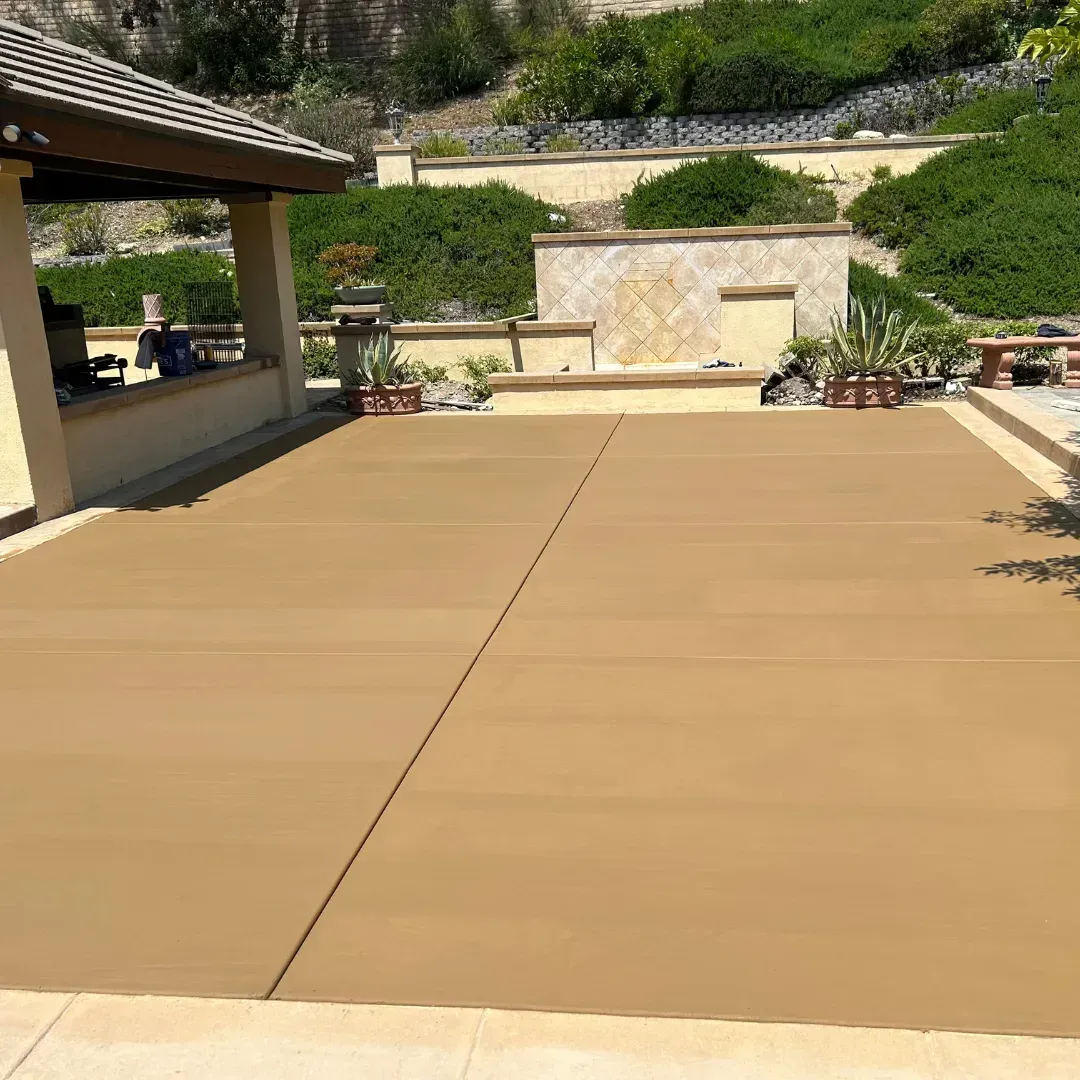
After stamping and curing, you will see defined patterns, realistic texture, and color variation that mimics natural materials. The surface feels solid and smooth, with no loose joints or individual pieces that can shift or come out of place. Sealed stamped concrete resists staining from oil, dirt, and spills, and it sheds water without allowing penetration into the slab. The finish holds up well under direct sunlight and does not fade as quickly as some outdoor paints or coatings.
Moes Concrete uses patterns and finishes designed to handle local climate and daily use, and the crew works with you to select options that match your home's style. Stamping works best on larger surfaces where the pattern can repeat and develop visual rhythm. The service does not include decorative overlays on badly damaged concrete, but surface preparation can address minor imperfections before the pour.
What to know before committing to decorative concrete
Homeowners in Ontario usually ask about maintenance requirements, color longevity, and whether stamped concrete cracks like standard slabs. Understanding how decorative finishes age and what upkeep looks like helps you decide if this approach fits your property.
Stamped concrete combines durability with visual interest, making it a practical choice for driveways, patios, and walkways that see regular use. To explore pattern and color options for your Ontario property, contact Moes Concrete and set up a project consultation.